

Every Friday, Jim Ross hosts a “Storage Meetup” on the Self Storage Show podcast where owners, operators, and vendors in the self-storage industry jump on their computers, turn on their cameras, and learn from each other. It’s a space where real conversations take place, including live demos, with the goal of getting you more rentals, improving your operations, and staying informed and ahead in the self-storage industry.
The “Show and Tell” part of the show features someone from the self-storage community sharing something live—such as a demo, workflow, dashboard, or marketing campaign. This is meant to spark conversation and showcase real results from owners and operators.
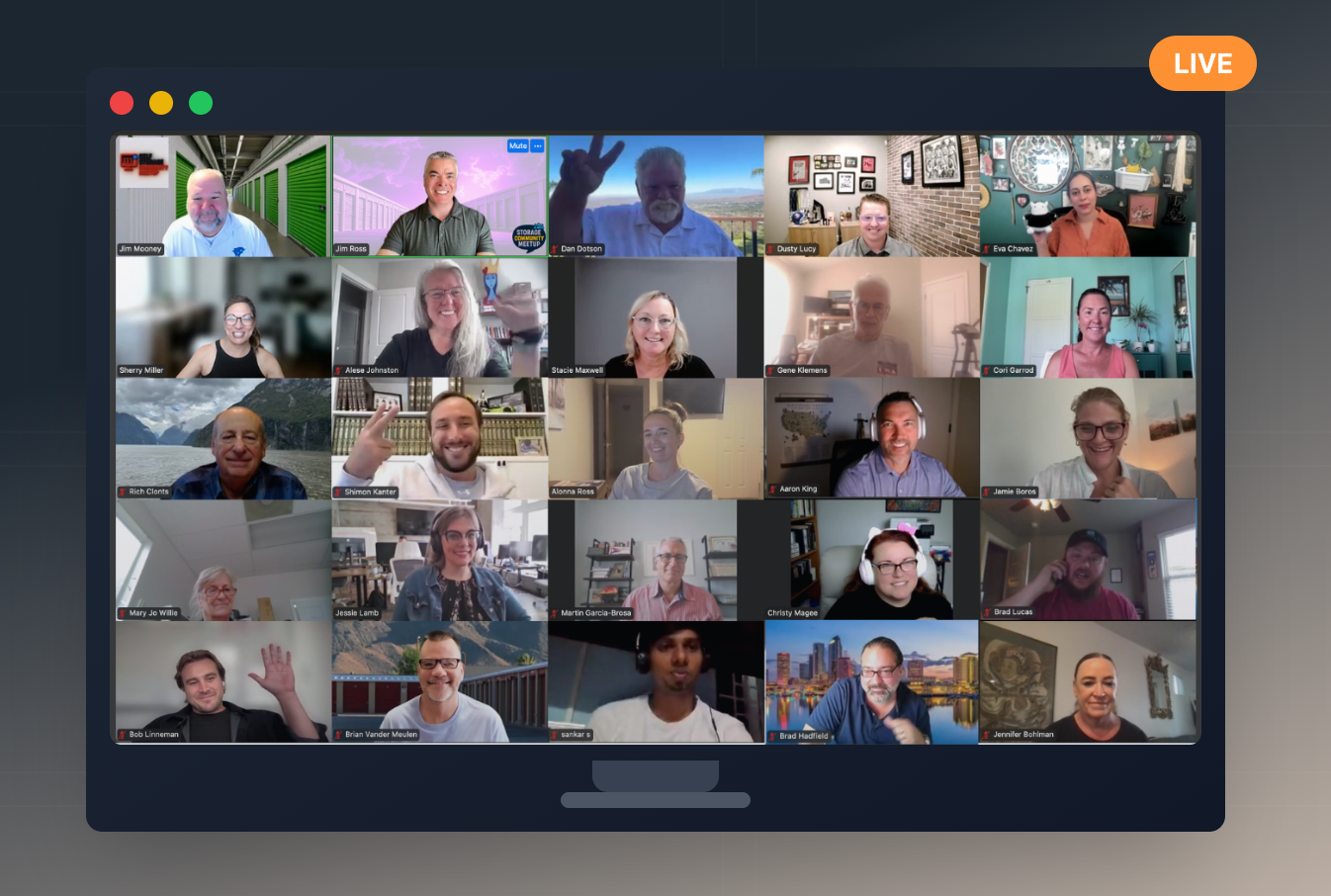
In Episode #63, which took place on January 30, 2026, Gab Goncalves presents a live demo of Monument during “Show and Tell”, unpacking the software from the ground up and really getting into the “how” and “why” of its development. Afterwards, there’s an open discussion about lead tracking, manager training, and operational best practices.
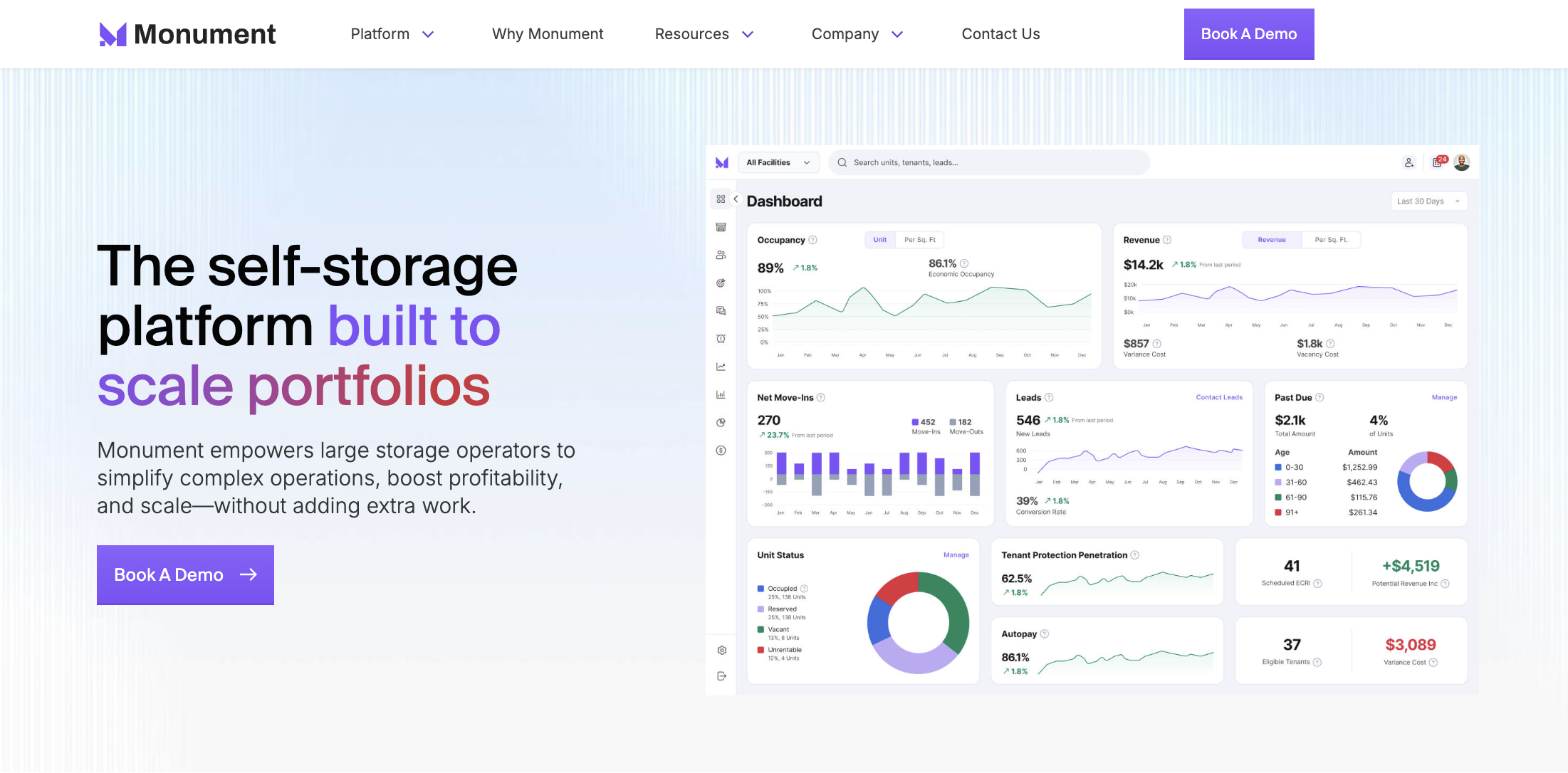
Monument was developed in direct response to operator feedback that legacy systems were not designed for modern, multi-facility portfolios. The platform was built alongside operators, with an advisory panel of 40+ facility operators pressure-testing workflows before launch. The platform is focused on insights to drive rentals, improve expense ratios, convert leads, and optimize operations.


One hot-button topic that was discussed during the podcast was maximizing lead conversions. This is a major consideration because if leads aren’t contacted immediately, they can easily give up and go elsewhere.
“Lead conversion rates are exceedingly better the quicker that you respond… if you respond within five minutes, your conversion rate is eight times higher.” – Cori, Garrod Self Storage
Multiple operators mentioned the importance of simply answering the phone. Some operators think that people don’t call anymore, but the real-world discussion that took place here proves that yes, customers do still call, and if you’re not answering the phone, you’re losing business. It was even mentioned that Google’s AI has begun calling businesses to verify pricing, and failing to answer those calls could cause a facility to drop from search results.
“I actually took caller ID out of all my stores… completely. That way, they [managers] can’t screen calls [to determine whether to answer or not]. And people [act] like you’re crazy for doing that, but it worked.” – Shannon C, XPS Solutions
Having an effective lead tracking phone number on your website is also extremely important. Dynamic lead tracking numbers are preferred over static ones, as they help protect information like Name, Address, and Phone (NAP) consistency for SEO purposes.
“I’m a big fan of a tracking number on different places [website, Google My Business, etc.] so that if they just dialed that phone number, you automatically know where it came from…” Jim Mooney, Mooney Storage Solutions
In addition to a tracking number, multiple operators agreed that your website should make pricing clear, as this assists with conversions.
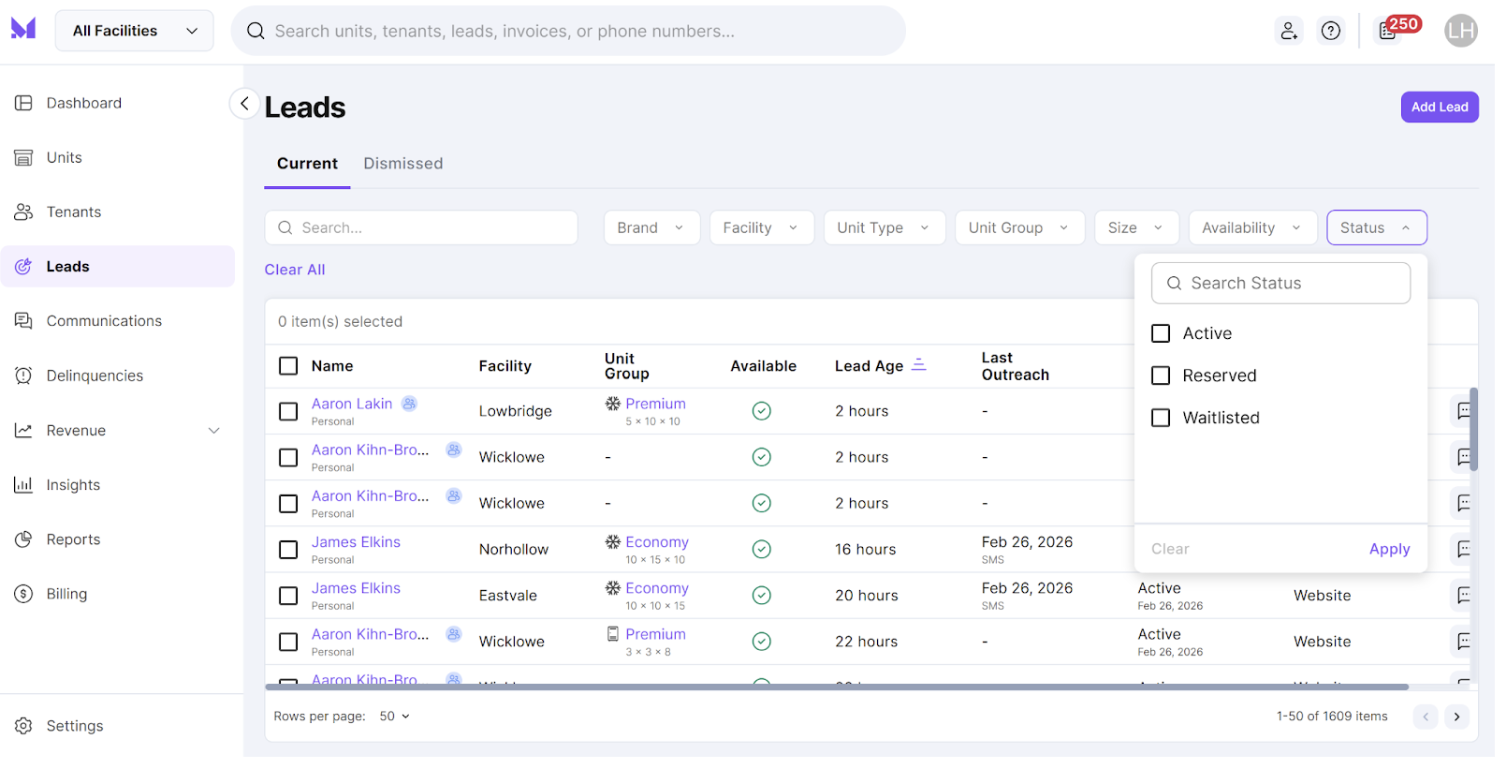
Giving up on leads too quickly can potentially cost you business. Setting your software to get rid of “expired” leads ensures that your system doesn’t get bogged down with contacts that won’t go anywhere, but having a list of ten or more leads ready to go is valuable so you always have prospects to reach out to.
“[T]here was an area that had high parking, and they were full, but they kept leads pending, and when they got a few vacancies, they went back to the list and called like 10 people. They got five rentals from people who were still on a list.” – Jim Mooney, Mooney Storage Solutions
Here’s how Monument’s Lead Dashboard Helps:
Managers should feel comfortable and confident with sales. A big part of that is setting clear and realistic expectations. These expectations are often tested through “mystery shops” where owners or hired individuals will go into a store to see if processes are being followed. Multiple operators highlighted the two most important things that their managers and staff should be asking when a customer walks into the store:
Making sure that your team mentions all of your facilities to potential customers when it’s appropriate to do so is important. This ensures that if one facility is full, but you have another one close by, the customer can still do business with you.
“[I]f you have, for example, a facility in Columbus, Georgia, and maybe you’re at 96% occupancy, and you don’t have that unit… Are you offering your facility four miles down the road that does have those units, or are you simply saying, ‘Hey, thanks so much for calling. Unfortunately, we don’t have any[thing available]'” – Derek Torres, World Insurance Associates
A good practice is auditing your call center’s script or template to ensure that everything is being followed when that call connects. Doing this periodically holds your call center accountable and ensures your customers are getting the service they deserve.
Storage Meetup #63 reinforced a simple but powerful truth: working smarter, not harder, is key in this industry. From rapid lead response and disciplined phone handling to structured manager training and portfolio-wide visibility, the discussion made it clear that execution drives NOI.
Monument’s live demo illustrated how modern operators can systematize what top performers already know—standardize workflows, automate follow-up, track demand shifts in real time, and eliminate revenue leakage during transitions. The takeaway is not just about software; it is about control. Operators who combine strong operational fundamentals with enterprise-grade automation and analytics position themselves to convert more leads, reduce operational drag, and scale with confidence.
For serious operators focused on maximizing performance across multiple facilities, the message was clear: the right systems turn best practices into repeatable results.
See Monument in action. Book a demo with us today for a tailored walkthrough, or reach out to us directly with any questions.