


There’s evidence that the self-storage market has stabilized. Average national occupancy percentage levels seem to be holding strong at the mid-to-high 70s, likely due to a downturn in the economy and the housing market freeze.
What this means is that demand is consistent, which is a good thing, but at the same time, with 1 in 3 Americans renting a storage unit, rental prices have become more competitive. With softening rental rates, nailing the conversion funnel to attract and retain tenants is crucial. This is the process of taking a person who makes a basic inquiry and turning them into a paying tenant who signs a lease agreement.
Attracting these customers is just the first step. Once you’ve got them in the funnel, you have to work to keep them moving through it. When you’re talking about one facility, it’s easy to visualize the lead-to-lease process and make tweaks here and there to optimize. When lead tracking, follow-up messages, and web shopping cart recovery are left to individual property managers, the process breaks down, and potential tenants drop off.
This guide provides a clear framework to help you spot those breakdown points and establish a centralized, automated leasing strategy across your entire network of locations.
Key Takeaways
To fix the revenue losses in your growing storage business, you must first create a clear set of metrics for your entire company. Without a single standard definition of what a lead is and how to track it, your operations team will struggle to make accurate business decisions.
A lead is anyone that has expressed interest in a unit, but hasn’t yet completed a lease. Interest can come via:
The lead to lease process represents the entire journey a prospect takes in becoming a customer with your company. This journey begins the exact moment a person asks about unit availability, sizing, or rental prices. A lead can enter your system through several different channels:
The process continues through every follow-up interaction, such as automated text messages, property tours, and unit reservations. The journey ends only when the customer signs a digital lease agreement, makes their initial payment, and receives their gate code to move in.
To fix the revenue losses in your growing storage business, you must first create a clear set of metrics for your entire company. Without a single standard definition of what a lead is and how to track it, your operations team will struggle to make accurate business decisions.
Clear definitions of how to count a lead are a must, otherwise it’s easy to count the same lead twice. The path a lead follows from when they first interact with your business to becoming a customer rarely has just one touchpoint. For example, someone might find you online, call in to verify some information, and then visit your facility in person to complete the transaction.
Your software should use an unique identifier like a phone number to make sure that only one lead is counted. If you count a lead twice, your reports and benchmarks surrounding lead acquisition won’t be accurate.
This is why lead duplication prevention is so important. With Monument, when a prospect enters the rental flow, the system generates a unique session ID and stores it both on their device and in the software’s database. This means if the prospect leaves your website and then visits it again using the same device, the system recognizes that ID and picks up where they left off rather than starting a new session. The same thing applies if the prospect decides to call or visit your facility; the system is able to recognize that unique ID for that customer, preventing duplicate information from being created. It also prevents the customer from having to repeat or re-enter their information.
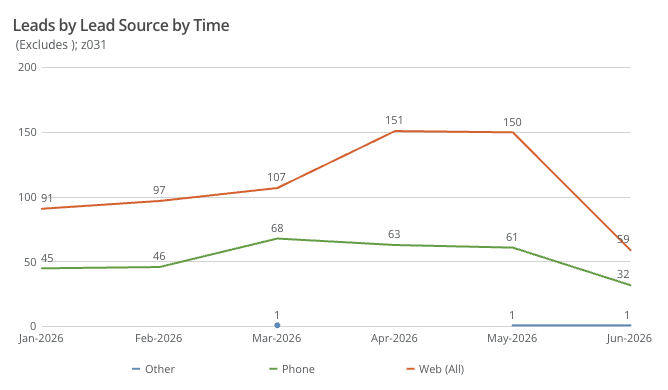
An example of a Leads by Lead Source (sorted by time) graph in Monument.

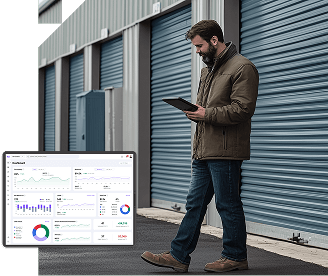
To evaluate how well your properties are performing, you must regularly calculate your lead to lease conversion ratio. This calculation looks at the total number of unique leads generated versus the number of leases that are actually executed.
Lease Conversion Ratio (%) = Total Executed LeasesTotal Unique Leads Generated x 100
For this metric to be useful, you must track it within a specific window of time, such as seven days or thirty days from the first contact. If you don’t set clear tracking limits, your data will become messy, and you will miss major signs of underperformance at your properties. Finding the best way to increase lead-to-lease conversion is a constant goal for operators who want to grow their businesses without spending more on external advertising.
A new lead has a short window. Prospects looking for storage are often making quick decisions, and if they don’t hear from you, they’ll move on to the next option. How fast you respond to a new lead is one of the most important factors in whether you convert them.
Track and optimize your average response time. The faster your team, or your automation, makes first contact after a lead is created, the higher your conversion rate will be.
A major challenge in self storage lead-to-lease management is that inquiries come from many different places at once. Prospects interact with your brand across a variety of online and offline environments.
The table below breaks down the main inbound channels that drive prospects into a multi-facility self-storage portfolio:
| Lead Source | Natural Intent Level | Main Operational Challenge |
| SEO and Organic Website Traffic | High Intent | Technical friction or slow page load speeds on legacy websites |
| Abandoned Digital Carts | Extremely High Intent | Failing to trigger an immediate, automated follow-up track |
| Direct Inbound Voice Calls | Medium to High Intent | Inconsistent manual follow-up logs by busy property managers |
| Third-Party Marketplaces | Low to Medium Intent | High price sensitivity and intense local competitor comparison |
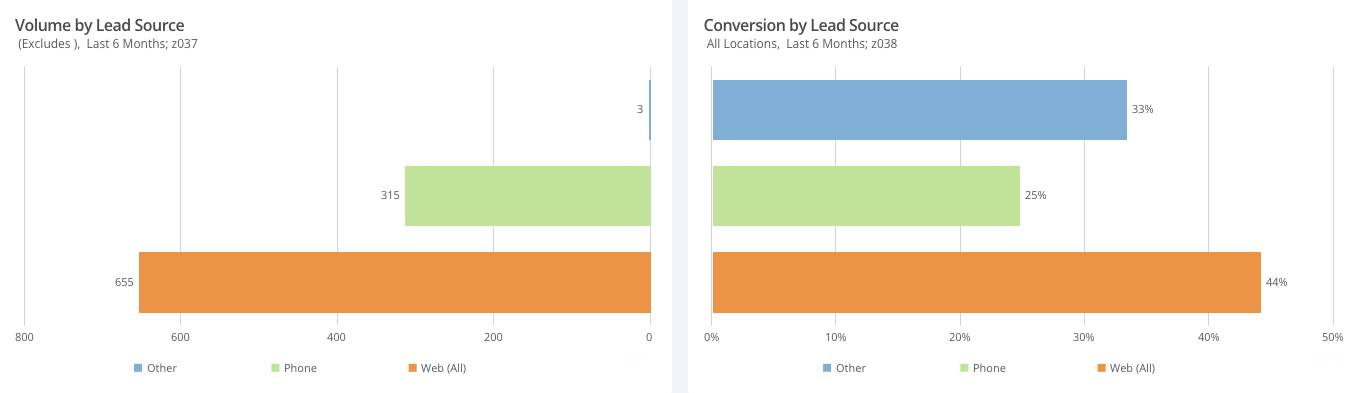
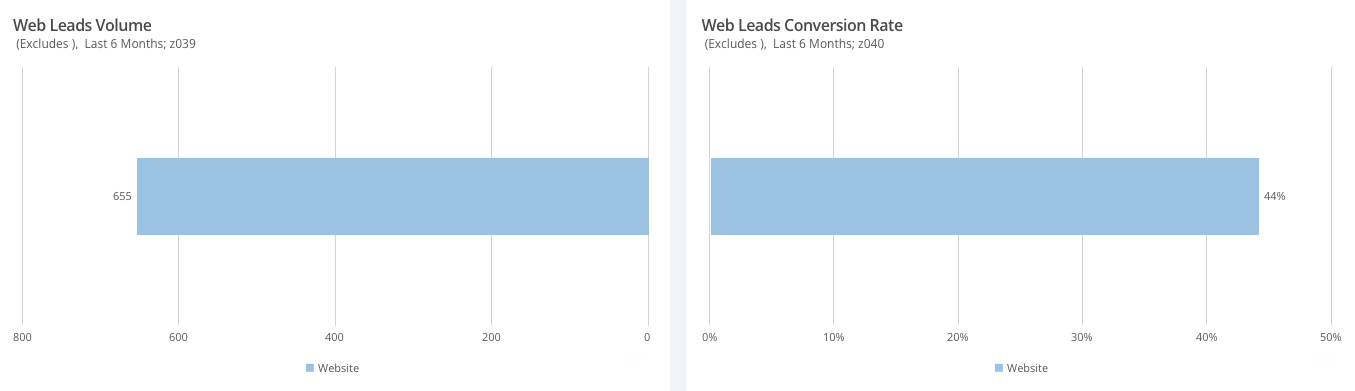
Graphs in Monument that allow you to track where the majority of your leads are coming from.
For a Director of Operations or a Portfolio Owner, the biggest reporting mistake is looking at self storage lead-to-lease data only at the individual property level. A facility-level view lets a local manager look at their immediate customer queue, but it hides wider patterns across your business.
For example, if one property closes 40% of its leads while an identical sister property down the road closes only 10%, a local system treats them as completely separate stories. A true portfolio view gathers all this data into a single screen. Monument’s Navigator lets you customize this further by grouping your facilities together.
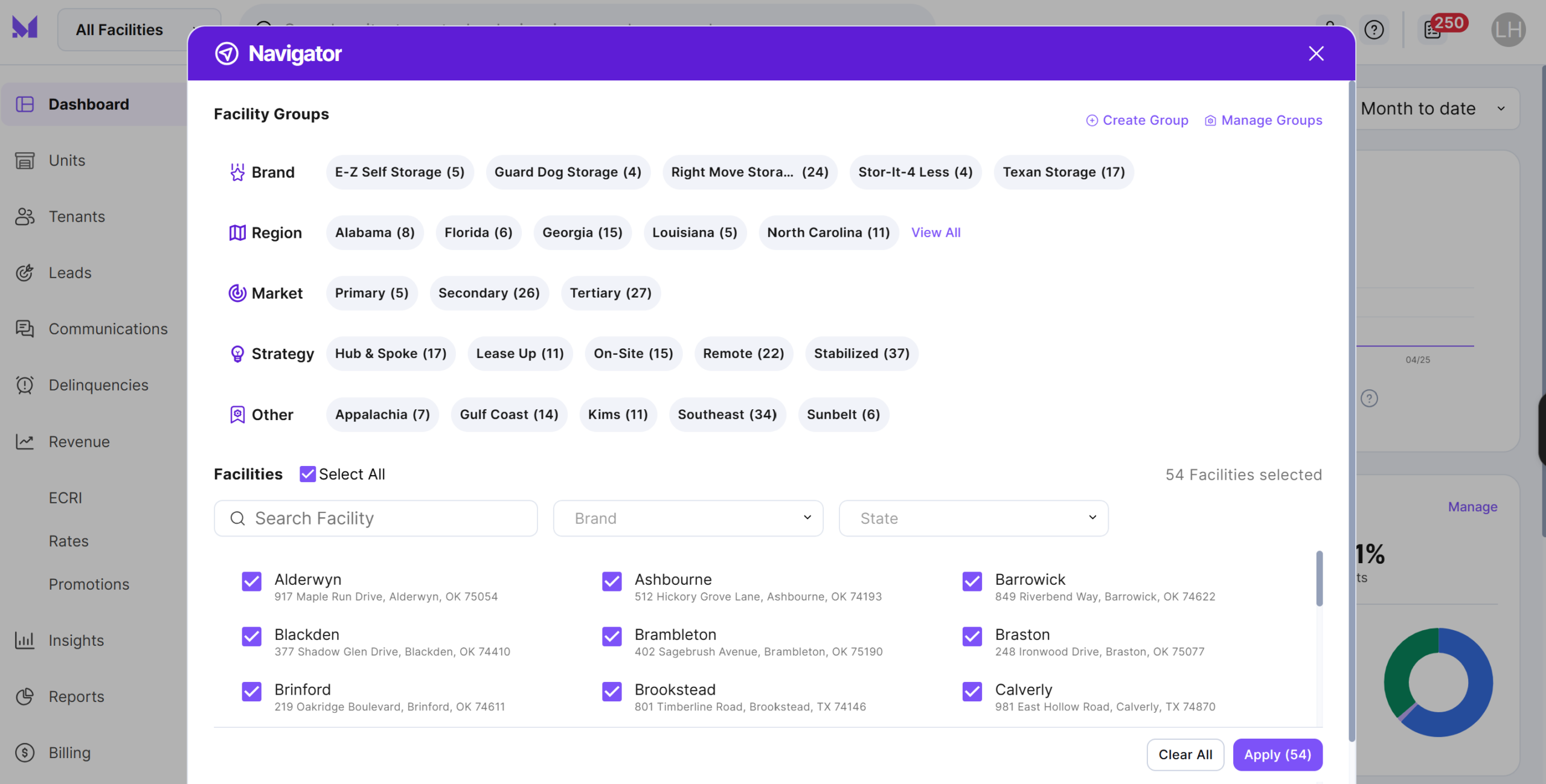
Monument’s Navigator.
This allows company executives to see if a specific site has a staff performance issue, a pricing problem, or a technology failure. For professional operators who manage multiple locations, the portfolio view is the only metric that provides the clarity needed to satisfy bank requirements and private equity investors.
Prospects who don’t complete a lease usually have one of two objections: the unit they wanted isn’t available, or the price isn’t right.
For inventory mismatches, the response should offer a clear alternative. If a prospect was looking for a 10×10 and only a 10×20 is available, offer the larger unit at the 10×10 price. If a nearby facility has the right unit, offer an incentive to make the extra distance worth it.
For price objections, this is where promotions earn their keep. A time-sensitive offer, such as the first month free if they complete the lease today, can be enough to close a lead that would otherwise go cold.
The most effective way to deploy these responses is through automated rules. Rather than relying on staff to remember to follow up or decide what to offer, operators can define rules that trigger the right response based on the situation. Key parameters to build those rules around:
When a storage business grows from a few local properties to dozens of locations across different states, manual habits stop working. Systems that worked fine for a single building quickly become obstacles that stall your revenue growth.
Without centralized control, each facility manager ends up running their own individual leasing process. Sometimes they operate with no defined process at all. In this loose model, your sales numbers depend entirely on the mood, energy level, and technical skills of the person working the front desk.
You might have one manager who calls a web lead back within fifteen minutes. At another property in your portfolio, leads might sit unaddressed in an email box for three days because the manager is busy cleaning units or checking locks. At the corporate headquarters, this massive variance is completely invisible unless your management platform brings it to the surface. In a competitive market, waiting too long to contact a lead means that customers will simply rent from the competitor down the street.
Speed of response is one of the single biggest drivers of lead conversion, and one of the easiest things to lose visibility over at scale. Studies consistently show that the odds of converting a lead drop sharply within the first hour of inaction. Across a multi-facility portfolio, that window closes at a different rate at every single location.
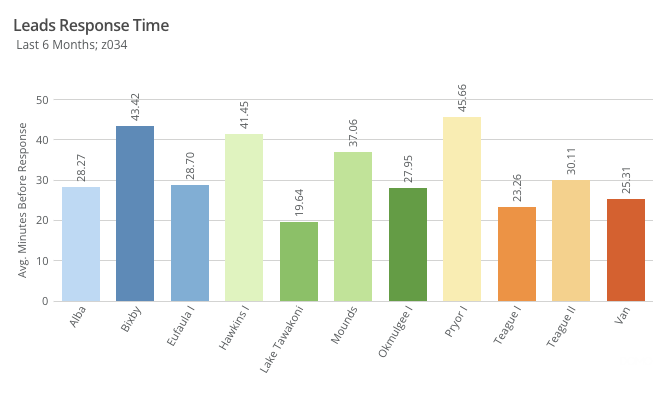
Example of a Leads Response Time graph in Monument.
Without centralized response time tracking, there is no way to know which facilities are following up within minutes and which are letting leads sit for hours. By the time that pattern shows up in your occupancy numbers, you have already lost the revenue.
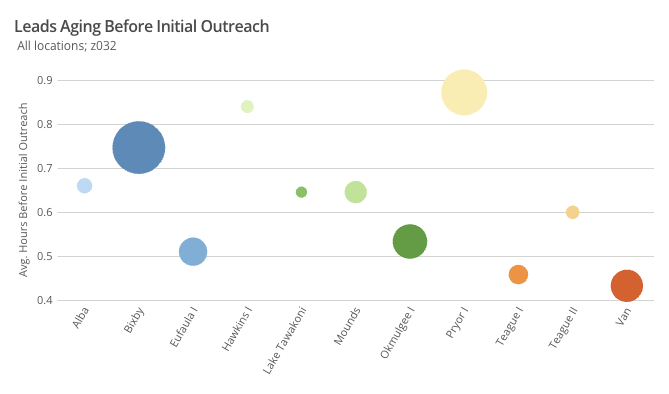
An example graph in Monument showing the average rate that leads age before someone reaches out to them, sorted by facility. The large circles allow a quick understanding of how different facilities in your portfolio prioritize lead outreach.
Without institutional reporting, you can’t separate top-of-funnel marketing issues from bottom-of-funnel operational problems. Corporate teams often make the mistake of spending more money on local digital ads for an underperforming property. They assume the property just needs more web traffic.
In many cases, the property already has plenty of traffic, but the local staff is failing to close the leads. Forcing your regional operations managers to log into 40 or 50 different instances of a legacy Facility Management System is highly inefficient. Cobbling together mismatched spreadsheets from various logins takes hours and introduces human errors, which prevents you from making fast changes to your pricing or sales strategy.
In modern e-commerce websites, a person who starts the online rental process, types in their contact information, selects a specific unit, but leaves before paying is your highest-intent lead. They have explicitly told you that they need storage right away and are ready to buy.
In legacy software setups, these incomplete sessions simply disappear into data dead zones. If those abandoned carts are not automatically captured and pushed into a structured follow-up system, you are leaving signed leases on the table. Trying to find this data manually across dozens of properties is an impossible task for a lean corporate team.
Many storage operators use legacy websites developed by third parties that integrate with their primary databases through inline frames, which are commonly called iframes. An iframe functions like a window cutting through your website to display another page, which creates a clunky and frustrating user experience. This setup causes several critical business problems:
Every single step of technical friction on your website causes an immediate drop in conversion rates and a loss of net operating income.

Fixing these revenue leaks requires a complete shift to a modern lead-to-lease automation system. This approach replaces manual employee habits with automated software workflows, ensuring that every inquiry follows a proven path toward a signed lease.
A modern lead to lease software system ensures that no customer inquiry requires manual entry or staff intervention to get into your database. Whether a lead comes from an organic search result, a paid ad, a marketplace, or a web form, the data is captured instantly. The prospect is immediately dropped into an active sales workflow.
When you’re managing a large multi-facility network, this kind of automated capture is a basic necessity for maintaining stable occupancy across your properties.
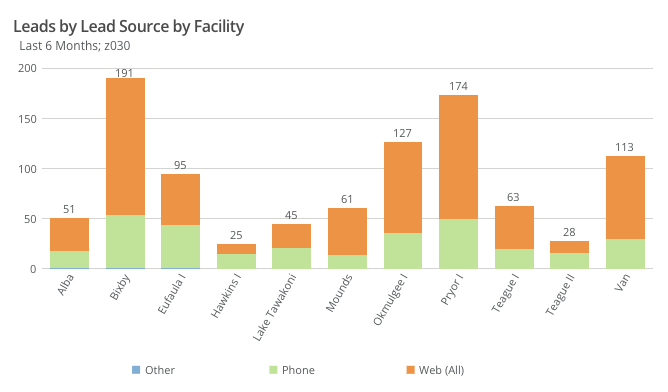
An example of a “Leads by Lead Source” (sorted by facility) graph in Monument.
Centralized automation allows your corporate management team to design a single, high-performing follow-up schedule at headquarters and deploy it across all locations with one click. Instead of hoping that a local manager remembers to follow up, text messages and emails are sent automatically based on how old the lead is and how the customer behaves.
This consistent outreach is exactly what Monument’s Automation Rules engine was designed to handle. The software uses simple, automated steps:
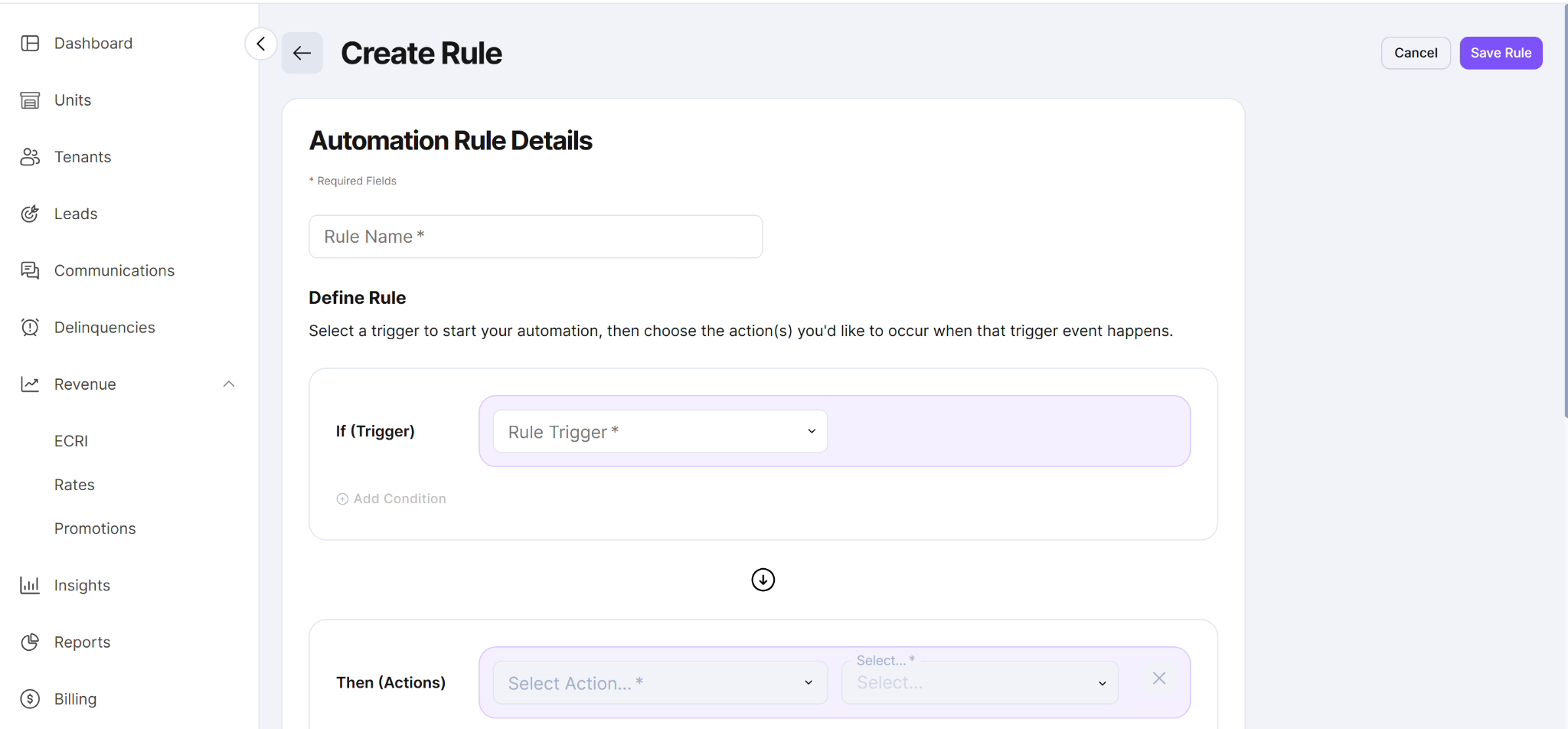
Monument’s automated rules system.
This system runs identically whether you own 5 properties or 95 properties. Moving to this type of automated workflow dramatically reduces the number of manual phone calls or emails your staff has to make, freeing up their time while increasing overall lease sign-ups.
When a consumer closes their browser tab before completing an online rental, your software infrastructure must treat that exit as an active sales trigger. By using an online store that connects directly with your main database, abandoned cart data feeds into your system instantly without manual steps.
The system triggers an automated text message or email within minutes, providing a direct link that reopens their exact shopping session. This fast response gives one more touchpoint for customers who are on the fence about renting from you or a competitor, or just need one last nudge to complete their purchase.
To achieve maximum revenue growth, you can’t view your customer-facing website as a simple digital billboard. It must function as a core piece of your operational infrastructure. A native, mobile-first website pulls live inventory spaces and direct pricing tiers from your database in real time.
The online checkout process is built to use as few forms as possible to reduce user drop-off. To help operators maximize the financial value of every new transaction, the digital storefront includes several built-in features:
Automation only compounds in value when you can see what it’s doing. A centralized reporting layer gives your corporate team a live view of funnel performance across every facility in the portfolio, so you know exactly where leads are converting and where they’re falling out.
Rather than waiting for a regional manager to compile a weekly spreadsheet, Monument’s Insights module surfaces the metrics that matter in real time:
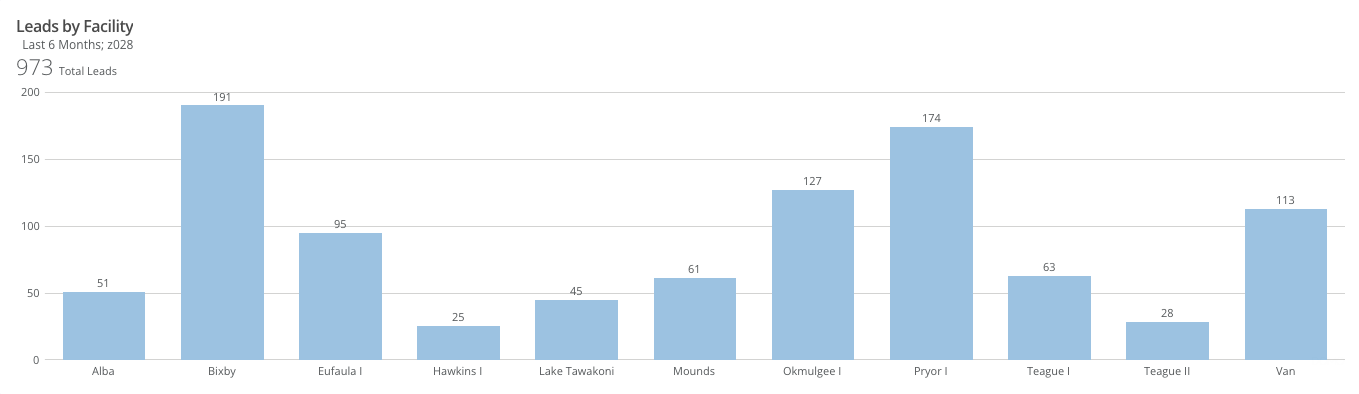
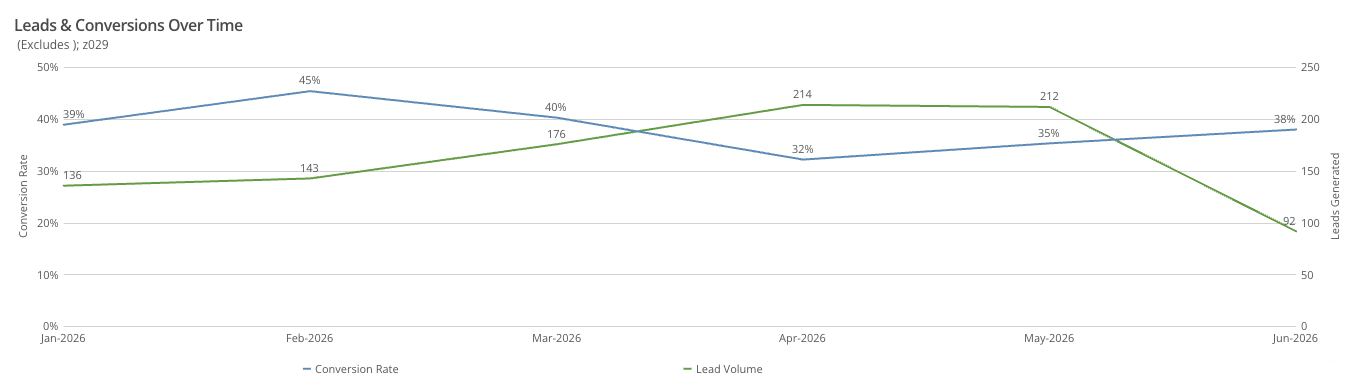
Examples of “Leads by Facility” and “Leads & Conversions Over Time” graphs in Monument.
When your lead-to-lease funnel is fully automated and fully visible, the guesswork comes out of occupancy management. You stop reacting to performance gaps after the fact and start correcting them in real time.
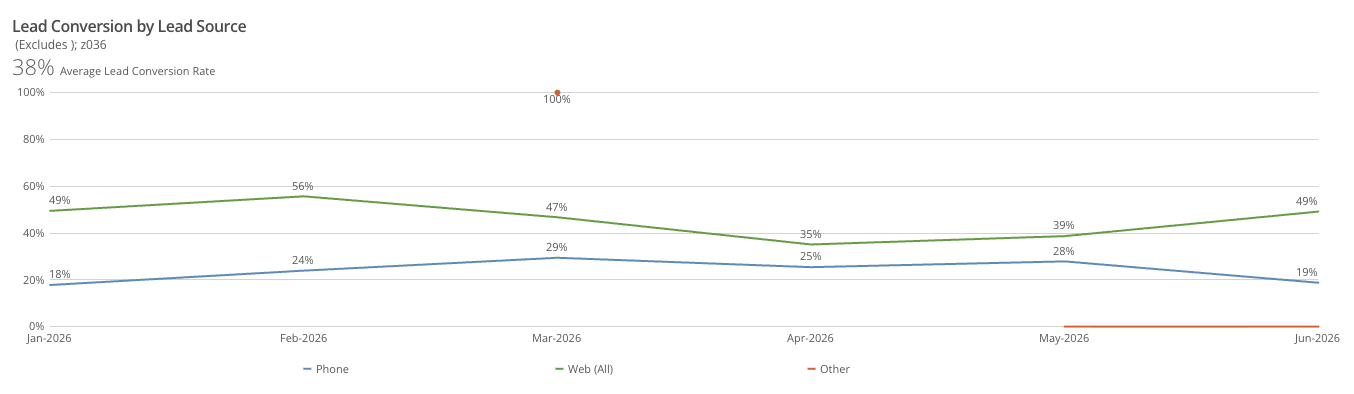
Standard automation works by following fixed rules, such as sending a text message after two hours. Layering a lead-to-lease AI system onto your business allows you to move from fixed rules to a model of constant optimization.
In professional self storage operations, a lead to lease ai engine doesn’t mean installing a generic chat widget on your homepage. Instead, it means applying smart pattern recognition to your historic conversion data to find hidden revenue opportunities.
Understanding this difference is what separates storage companies that get basic results from those that compound their returns over time. When you use AI tools improve lead-to-lease conversion rates, you can use software algorithms to answer complex operational questions across your properties, such as:
A highly experienced manager can develop an intuitive feel for these customer patterns at a single building over a long period of time. However, a human corporate team cannot manually track and calculate these deep behavioral trends across a portfolio of 40 or 90 separate storage properties.
This data tracking gap is the exact business vulnerability that artificial intelligence is built to close. Many operators choose to evaluate peek on lead-to-lease conversions or test advanced business intelligence systems to find these answers.
The comparison table below highlights how traditional rule-based automated workflows differ from advanced AI optimization engines:
| Core Operational Area | Traditional Rule-Based Automation | Advanced AI-Optimized Approach |
| Follow-Up Schedules | Uses fixed delays like sending a text after a set number of hours | Dynamically shifts touchpoint intervals based on local conversion patterns |
| Promotional Yield | Applies flat discounts manually across an entire district or region | Automatically deploys targeted discounts based on real-time unit demand shifts |
| Funnel Dropout Analysis | Sends a basic alert when an online checkout form is left incomplete | Pins down the exact steps where users drop out to isolate pricing or friction |
| Lead Channel Routing | Routes all incoming inquiries through the exact same message track | Separates leads by source to adjust follow-up velocity and aggression windows |
To use machine learning models successfully, you must have an incredibly clean data structure. If your management data is split across disconnected systems, an AI algorithm cannot learn anything useful. Monument’s Insights module solves this technical requirement by automatically connecting lead sources, response times, conversion rates, and localized unit demand data.
The system displays nearly 100 business graphs across its dashboards. These charts do not just show you what happened yesterday, they explain why it happened and where your biggest revenue opportunities are located.
Monument is actively developing advanced software capabilities that feed this structured data directly into an AI engine, creating a custom operational knowledge base for each client’s unique portfolio. The long-term goal of this project is to surface automated operational recommendations based on your real customer history rather than generic industry averages. This means you get a smart software layer that understands your exact unit mix, local market competition, and seasonal tenant trends.

To see how combining centralized automation with predictive AI updates your daily business operations, look at these three practical examples:
Imagine a specific property where the local lead to lease conversion rate drops eight points below your company average over a 45-day window. Under an old management system, finding the cause of this drop would require weeks of manual spreadsheet audits by a regional manager.
An AI-assisted platform spots this drop instantly. The system analyzes the property data and connects the drop to a 19-hour average lead response time at that specific location. It reveals that the automated alert rules drifted out of place after a recent local staff change and were never turned back on. The system flags this issue inside the Insights dashboard immediately, allowing your corporate operations team to fix the rule gap before the drop hurts your monthly facility occupancy.
Across a large 60-facility storage portfolio, a corporate team sets their automated cart recovery texts to send after a 12-hour delay. By executing a continuous analysis of all text delivery data across your properties, the AI engine spots an important trend. It finds that recovery text messages delivered within 4 hours of a cart abandonment event actually convert at 2.3 times the rate of messages held until the next morning.
The system shares this pattern with your executive team. With a single configuration change deployed portfolio-wide, you can update your communication delay across all 60 locations at once, driving an immediate increase in rental sign-ups.
A detailed analysis of your inbound lead sources shows that prospects coming from third-party marketplace networks convert at a 40% lower rate than direct organic website traffic. Even though marketplace shoppers have very different buying habits, an old management system typically routes both groups through the exact same message track.
An AI-assisted system handles this variance by implementing smart lead segmentation. The platform automatically routes marketplace leads into a shorter, more frequent follow-up cadence to capture their attention before they look at a local competitor. This targeted tracking lets your property managers focus their human energy on your highest-value direct leads.
The multi-facility storage operators who successfully close their lead-to-lease conversion gaps do not win simply because they work harder or have a better local team culture. They win because their underlying software infrastructure makes operational mistakes and slow follow-up far less likely.
The long-term financial impact of combining automated task execution with continuous AI optimization builds a powerful operational moat around your business. Operators who implement these centralized systems today will be significantly harder for legacy competitors to catch over the next twelve months.
To see where your business stands today, ask yourself this one operational question: Can your management platform show you your true, portfolio-wide lead-to-lease conversion rate inside a single reporting screen right now?
If your current software system cannot display that aggregated metric instantly, your company is operating with a significant blind spot and missing out on monthly rental revenue. That reporting gap is exactly where your operational updates must begin.


Explore top self-storage software solutions with key features, comparisons, and tools for facility operations, marketing,...

Explore top facility management software systems for self-storage, including key features, benefits, and how these...

Discover how 3rd party self storage management improves operations, revenue, and NOI—and what to look...